Moving house is an exciting milestone, but it's rarely as straightforward as packing boxes and driving to a new address. Delays, changing timelines and unexpected circumstances can quickly turn a carefully planned move into a stressful experience.
Whether you're waiting for settlement, downsizing, renovating or relocating interstate, temporary storage can provide the flexibility you need to keep your move on track.
While traditional self storage has long been one option, mobile storage can simplify the process by bringing the storage container directly to your property. You can pack at your own pace, have the container collected when you're ready and arrange delivery once your new home is available.
If you're new to the process, our guide to how moving house with a storage container works explains what happens from delivery through to packing, collection and redelivery.
Even the most carefully planned move can experience unexpected delays or changing circumstances.
Temporary storage gives you somewhere to keep your furniture, boxes and household belongings without having to rush decisions simply because moving day has arrived.
One of the most common moving challenges occurs when settlement dates don't match.
You may need to vacate your current property before your new home is ready, leaving you with several days or weeks with nowhere permanent to put your belongings.
Temporary storage bridges that gap.
Instead of moving everything into a storage facility and then loading it again when your new property becomes available, mobile storage lets you pack your belongings directly into the container that will store them.
Once your new home is ready, the container can be delivered to the new property for unloading.
This can significantly reduce double handling during the move.
Moving into a smaller property creates a different problem: you may have more belongings than your new home can comfortably accommodate.
Trying to decide what to keep, sell, donate or give to family while you're also managing a move can put unnecessary pressure on the process.
Temporary storage gives you more time.
Furniture and belongings you're unsure about can remain in storage while you settle into the new property and work out what actually fits.
If downsizing is part of your move, it can also help to start decluttering before moving day. Our guide to the steps to take when decluttering provides a simple way to start sorting through what you own.
Sometimes you've purchased the new house, but you're not ready to move everything into it.
Painting, flooring, kitchen renovations, bathroom renovations or larger building works can make moving furniture into the property immediately impractical.
Storing furniture and household items temporarily keeps them away from dust, trades and active work areas until the house is ready.
If you're completing substantial work before moving in, read our complete guide to storage during a renovation for more information about managing furniture and belongings while renovating.
Temporary storage can also be useful before you've even sold your current property.
Preparing a home for sale often involves removing excess furniture, personal belongings and general clutter to make rooms feel larger and easier for potential buyers to imagine themselves living in.
But decluttering doesn't mean you have to get rid of everything permanently.
Furniture, boxes, collections, children's belongings and other household items can be placed into temporary storage while your property is photographed, inspected and marketed.
If your main goal is simply to create more room, our guide to creating more space in your home without moving covers some situations where temporary storage can help reclaim usable space.
Long-distance moves can involve even more moving parts.
Transport schedules, property settlement dates, work commitments and temporary accommodation can all affect when you're able to move into your permanent home.
Mobile storage can provide a buffer between leaving one property and arriving at another.
Rather than coordinating every stage of the relocation around a single moving day, you can keep your belongings packed in their container until you're ready for them.
Renters can experience exactly the same problem.
Your existing lease might end before your next property becomes available, particularly if you're moving into temporary accommodation or staying with family between properties.
Temporary storage means you don't need to take all of your furniture and household belongings with you during the gap.
You can pack your belongings, store them, and arrange delivery once you've secured or moved into the new property.
Traditional self storage can solve the immediate problem of needing somewhere to put your belongings, but it can also create additional work.
A typical self-storage move might involve:
With mobile storage, the container comes to you.
You pack your belongings directly into the container, which can then be collected and stored until you're ready.
When your new property is available, the same container can be delivered there.
If you're comparing the two approaches, read our guide to mobile storage vs traditional self storage for a closer look at the differences.
The process is straightforward.
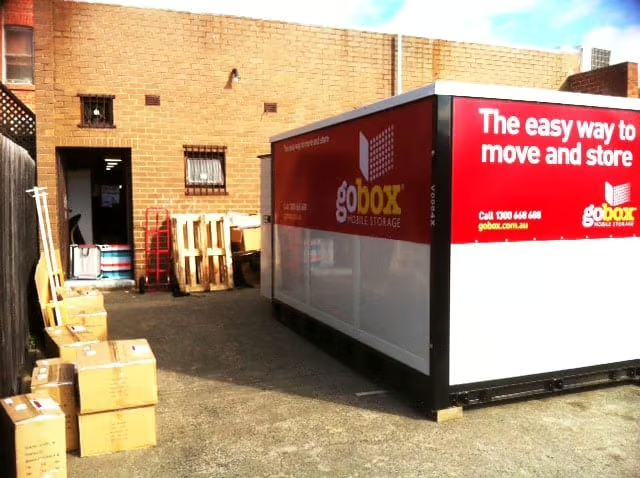
Your gobox is delivered directly to your current property.
This means you don't need to organise a separate trip to a storage facility before you can start packing.
You can progressively pack furniture, boxes and belongings rather than trying to move everything in one day.
Starting early can be particularly useful if you're preparing your home for sale or trying to make moving week more manageable.
Once packed, you can keep the container at your property where suitable or arrange for gobox to collect it.
If there's a gap between homes, you can store the container offsite until you're ready.
When the new property is available, your container can be delivered so you can unload your belongings.
You aren't transferring everything from one storage unit into another vehicle before finally getting it home.
For a more detailed walkthrough, see how moving house with a storage container works.
Mobile storage can solve several common moving problems at once.
One of the biggest advantages is reducing how many times you need to move your belongings.
Furniture can go from:
Your home → storage container → your new home
rather than:
Your home → truck → storage unit → truck → new home.
Reducing unnecessary handling can make the entire move easier.
Not everything needs to be packed the night before you move.
You can pack items you don't regularly use earlier, helping clear rooms and reduce the work required closer to moving day.
If settlement dates change, your belongings already have somewhere to stay.
This can take some of the pressure off coordinating storage, removalists and property access around a single date.
You might expect to need storage for two weeks and end up needing it for six.
Temporary mobile storage provides flexibility when your moving timeline changes.
Storage isn't the only decision you'll need to make when moving.
You also need to decide how much of the move you want to manage yourself.
Some people prefer full-service removalists, while others hire a truck and complete the entire move themselves.
Mobile storage sits somewhere between these options because the container is delivered to you and can then be transported once you've packed it.
If you're still deciding how to approach your move, we've compared moving pods vs removalists vs truck hire in more detail.
The right option depends on your budget, timeline, how much you're moving, and how much packing and lifting you want to handle yourself.
Booking storage before moving week can make the process much easier.
Consider arranging temporary storage if you're:
The earlier you organise storage, the sooner you can start packing belongings you don't need every day.
If you're packing progressively, start with things you can comfortably live without until after the move.
That could include:
Leave everyday essentials until closer to moving day.
It's also worth thinking about how you pack the container. Items you may need before everything else should generally remain more accessible rather than being buried behind large furniture.
Mobile storage providers don't all offer identical container sizes, construction or delivery systems.
If you're comparing gobox with other portable storage options, look beyond the advertised monthly price of a single container.
Consider how much space you actually need, how many containers will be required and the total cost of storing that volume.
We've looked at this in more detail in our guide for people comparing gobox with a wooden storage box.
gobox makes temporary storage simple by bringing the storage container directly to your property.
You can pack progressively, keep the container onsite where appropriate or arrange for it to be collected and stored offsite.
When you're ready to move into the new property, your container can be delivered again for unloading.
This can be particularly useful when your moving timeline isn't perfectly predictable.
Whether the gap between homes is a few days, several weeks or longer, your belongings can remain together while you organise the next stage of your move.
gobox provides mobile storage across Melbourne and Adelaide for people moving house, renovating, decluttering, downsizing and dealing with gaps between properties.
If you're still researching the broader storage options available, our Complete Guide to Storage in Melbourne explains the different types of storage and situations where each may be useful.
Moving house doesn't always go according to plan.
Settlement dates change. Renovations run longer than expected. Rental properties aren't always available exactly when you need them. And sometimes you simply need more time to work out where everything is going.
Temporary mobile storage gives you that flexibility.
Instead of rushing to coordinate your entire move around one day, you can have a storage container delivered, pack at your own pace and keep your belongings stored until you're ready for the next step.
And if you're only beginning to plan your move, start with our guide to how moving house with a storage container works to see how the complete process fits together.
Yes. This is one of the most common reasons people use temporary storage when moving. Your belongings can be packed and stored after leaving your current property, then delivered once your new home is available.
The time required varies depending on your move. You might need storage for several days, a few weeks or longer if you're waiting for settlement, renovations or another property.
Yes. Temporary storage gives you somewhere to keep furniture and belongings while you settle into your smaller home and decide what you ultimately want to keep.
Yes. Keeping furniture and boxes out of active renovation areas can help create more working space and keep belongings away from dust and building work. See our guide to storage during a renovation for more information.
Yes. With traditional self storage, you generally transport your belongings to and from a storage facility yourself. With mobile storage, the storage container is delivered to your property and can be collected once you've packed it.
It depends on how you want to manage your move. Removalists can provide a more hands-off service, while mobile storage gives you more time to pack and combines storage with transport. Our moving pods vs removalists vs truck hire comparison explains the differences.
Compare container capacity, total storage required, delivery options, construction and overall cost rather than looking only at the advertised price of one unit. You can also read our gobox vs wooden-box comparison for another comparison.
Renovating means clearing rooms fast - and finding somewhere safe for your furniture while the dust flies. Mobile storage is made for exactly this. Here is how to keep your belongings protected, and out of the way, during a renovation in Melbourne or Adelaide.
Instead of cramming everything into the garage or a spare room the tradies need, a gobox is delivered to your driveway. Load the rooms you are working on, then either keep the unit on-site for easy access as the project moves around the house, or have us store it at our secure warehouse until the work is done. There is no truck to hire, no double-handling, and no trips across town to a storage facility.
Many customers do both: keep the unit on-site during pack-up, then have it collected once the heavy work starts.
Be realistic: renovations rarely finish exactly on schedule. Trades get delayed, materials arrive late, and weather interferes. gobox storage is billed monthly with no long lock-in, so you can extend for a few extra weeks or months without penalty and finish up the moment your home is ready. You will not pay for months you do not use, and you will not be caught out if the project runs over.
The cost depends on the unit size, how long you store, and whether the unit stays on-site or comes back to our warehouse. Storage is billed monthly, and delivery is charged per trip. The fastest way to get an exact figure for your address is our instant online quote - it takes about a minute and no email address is required.
Renovating in Melbourne or Adelaide? gobox delivers a weatherproof storage unit to your door so you can clear rooms fast and keep everything safe until the work is done. Get your free quote today. Not sure what size you need? See our size guide.
Moving house comes with plenty of decisions, and one of the biggest is how you'll move your belongings.
Do you hire professional removalists, rent a truck and do it yourself, or use a moving pod for more time and flexibility?
Each option has its advantages, and the best choice depends on your budget, timeline, how much you're moving and whether you need storage along the way.
Here's how moving pods, removalists and truck hire compare.
Moving pods are portable storage containers delivered directly to your property.
Instead of trying to pack and move everything in a single day, you can load your container at your own pace. Once you're finished, we can collect it and transport it, or store it until you're ready.
Moving pods can be particularly useful when you have a gap between properties, are downsizing or want to start clearing your home before moving day.
If you're already feeling short on space while preparing for the move, our guide to how a mobile storage unit can solve space problems has some useful ideas.
Professional removalists handle the transportation and much of the physical work involved in moving.
Depending on the service you choose, they may load your furniture and boxes, transport everything to your new property and unload it at the other end.
Removalists can be a good choice when your old and new properties are both available on moving day and you want the move completed as quickly as possible.
Truck hire is the traditional DIY approach.
You hire a moving truck, pack and load your belongings yourself, drive to the new property and unload everything at the other end.
Truck hire can work well for smaller moves where you have plenty of help and both properties are available at the same time.
The biggest difference is how much control you have over the timing.
Removalists generally work around a scheduled moving day.
Moving pods allow you to start packing earlier and finish unloading later.
This can take some of the pressure off moving day, particularly if you're juggling work, children, cleaning or property settlement.
If you're packing yourself, it helps to start with belongings you don't use every day. Our older guide on how to pack for moving house has some practical tips for getting organised before the move.
Moving pods and truck hire are both more DIY than professional removalists, but there's an important difference.
With truck hire, you're responsible for transporting the belongings yourself.
With a moving pod, the container is delivered to you and transported once you've packed it.
That means you don't need to drive a moving truck or fit the entire move into a single hire period.
This is where moving pods can be particularly useful.
You might need to leave your current property on Friday but not receive the keys to your new home until the following week.
With a traditional move, this can mean:
Old home → moving truck → storage → moving truck → new home
With a moving pod, your belongings can remain inside the same container while you wait:
Old home → moving pod → storage → new home
This reduces the amount of loading and unloading required.
Moving into a smaller property can make moving day more complicated.
You might have furniture and belongings you're not ready to get rid of but aren't sure will fit into the new home.
Storage gives you some breathing room.
Rather than making rushed decisions, you can store belongings temporarily while you settle in and decide what you actually need.
Before you start packing, it can also be worth working through your belongings. Our steps to take when decluttering can help you decide what to keep, sell, donate or store.
If you already know you'll need storage, moving pods can simplify the process.
Instead of moving your belongings into a truck, unloading them into a storage unit and then repeating the process when you're ready to move into your new home, your belongings can remain inside the same container.
This can be useful when:
There's no single answer.
The total cost depends on:
Truck hire may look cheaper initially, but remember to consider fuel, insurance, equipment and potentially multiple trips.
Removalists include labour but can cost more depending on the size and duration of the move.
Moving pods combine storage and transport, which can make them particularly useful when you need both.
The best way to compare your options is to look at the total cost of completing the move, rather than only the initial advertised price.
It depends on your situation.
Choose removalists if: you want someone else to handle the heavy lifting and your moving dates line up.
Choose truck hire if: you're completing a smaller DIY move, have people available to help and can move everything within a set timeframe.
Choose moving pods if: you want more time to pack, need temporary storage or want greater flexibility around moving dates.
For moves where settlement dates don't line up or you need storage between properties, a moving pod can make the process considerably simpler.
With gobox, your moving container is delivered directly to your property.
You pack your belongings at your own pace, then we'll collect your gobox when you're ready.
Your container can be stored until your new home is available or transported to your new property for unloading.
No rushing everything into a moving truck. No unnecessary double handling. Just a more flexible way to move and store your belongings.
Whether you're moving house, renovating, downsizing, decluttering or simply running out of room, finding the right storage solution can make life a lot easier.
Melbourne has plenty of storage options, from traditional self-storage units to mobile storage containers that come directly to your home or business.
So, which type of storage is right for you? Here's what you need to know about storage in Melbourne in 2026.
There are plenty of reasons why you might suddenly need some extra space.
Some of the most common include:
If your home is starting to feel a little crowded, our guide, How a Mobile Storage Unit Solves Space Problems You Didn't Know You Had, looks at ways storage can help create more usable space.
Traditional self storage usually means renting a unit at a storage facility.
You pack your belongings, load them into a car, trailer or truck, drive them to the facility and unload them into your unit.
This can work well if you want regular access to your belongings and don't mind organising the transport yourself.
Mobile storage brings the storage unit to you.
Your container is delivered directly to your home or business, where you can load it at your own pace.
Once you're finished, the container can stay onsite or be collected and stored offsite until you need it again.
This means there's no need to hire a truck and transport everything to a storage facility yourself.
The biggest difference is simple:
Traditional storage: You take your belongings to the storage unit.
Mobile storage: The storage unit comes to you.
Mobile storage can reduce handling because you pack directly into the container that will store your belongings.
This can be particularly useful when you're storing larger furniture or the contents of several rooms.
Moving house is one of the most common reasons people need temporary storage.
Sometimes settlement dates don't line up, your new home isn't ready or you simply want to start packing before moving day.
Mobile storage lets you pack gradually rather than trying to move everything in one day.
If you're preparing for a move, our older How to Pack for Moving House guide has some useful tips for getting organised.
You can then store your loaded container until your new property is ready.
Renovating can quickly turn your home into a construction zone.
Furniture, appliances and household belongings can get in the way of builders and trades, while dust and debris can spread throughout the house.
Temporary storage gives you somewhere to keep these items until the work is finished.
Depending on your property, you can keep your storage container onsite or have it collected and stored offsite.
Sometimes you don't need to move at all — you just need more room.
A spare bedroom becomes a storage room. The garage fills up. Cupboards overflow.
Storage can help you clear some of that space without immediately getting rid of belongings you still want.
Before packing everything away, it's worth deciding what you actually need to keep.
Our Steps to Take When Decluttering with gobox Storage can help you work through what to keep, sell, donate or store.
Moving into a smaller home often means you have more furniture than you have room for.
Temporary storage gives you time to settle into the new property before deciding what stays and what goes.
Instead of making rushed decisions before moving day, you can store furniture and belongings until you know exactly how much space you have.
The amount of storage you need depends on what you're putting away.
Think about:
It's important to compare the actual capacity of different storage options rather than looking only at the monthly price.
A cheaper storage unit isn't necessarily better value if you need two or three of them to fit everything.
Mobile storage can be used for many common household and business items, including:
Always check what your storage provider allows before packing hazardous, flammable or perishable items.
One of the advantages of mobile storage is having both options.
If you have suitable space at your property, keeping your storage container onsite means your belongings remain close by.
This can be useful during renovations or when decluttering.
If you don't need regular access, your container can be collected and stored offsite.
When you're ready for your belongings again, the container can be returned.
Storage costs vary depending on:
When comparing prices, look at the total cost rather than just the advertised weekly or monthly rate.
Also compare how much storage space you're actually getting for that price.
Before choosing a storage provider, ask yourself:
How much do I need to store?
How long will I need storage?
Do I need regular access?
Do I want to transport everything myself?
Do I have room to keep a container onsite?
The answers will help determine whether traditional self storage or mobile storage is the better fit.
Mobile storage is designed to make the storage process simpler.
Instead of packing a truck, driving to a storage facility and unloading everything again, the storage container comes directly to you.
You pack it once.
Then you can keep it onsite or have it collected and stored until you're ready.
For moving, renovating, downsizing and decluttering, that flexibility can make a big difference.
gobox provides mobile storage across Melbourne, giving you a flexible alternative to traditional self storage.
We deliver your gobox directly to your property so you can pack at your own pace.
Once you're finished, you can keep it onsite or have us collect it and store it securely until you need it again.
Whether you're moving house, renovating, decluttering or simply need some extra room, gobox gives you storage that comes to you.
Mobile storage is a portable storage container delivered directly to your home or business. You load your belongings into the container and can either keep it onsite or have it collected for offsite storage.
Yes. Mobile storage can be particularly useful when moving because you can pack gradually and store your belongings if there's a gap between leaving your old home and moving into the new one.
Yes. A storage container can give you somewhere to keep furniture and household belongings while builders and trades are working in your home.
Yes. Temporary storage can help you create more room while you sort through your belongings. Our decluttering guide has some useful tips for getting started.
If you have suitable access and space at your property, your gobox can be kept onsite. Alternatively, it can be collected and stored offsite.
Feeling like your home is shrinking isn’t uncommon. Lifestyle changes, including working from home and growing families, can alter how we use our space. Over time, belongings accumulate, rooms lose their purpose, and suddenly your once-comfortable space feels cramped and overwhelming.
The good news? You don’t need an expensive, disruptive move to enjoy a more open, functional home. With a few intentional changes and the right storage solutions, you can reclaim space and restore a sense of calm.
Clutter rarely happens overnight. It builds gradually through daily habits, lifestyle changes and a lack of effective storage systems.
Another common cause of clutter is holding onto things “just in case”. Whether it’s sentimental items, unused furniture or seasonal gear, these belongings take up valuable space. Items that don’t have a designated place tend to pile up on surfaces, while cupboards and garages become overstuffed with miscellaneous goods.
If this sounds familiar, our guide to Steps to Take When Decluttering with gobox Storage is a useful place to start.
Start by decluttering your home with intention. Go room by room and sort items into categories: keep, donate, sell, store or discard. Be realistic about what you actually use and need.
Next, rethink how you use your space. Could a bulky coffee table be swapped for something with built-in storage? Could vertical shelving free up floor space? Multipurpose furniture, such as ottomans with hidden compartments, can make a big difference.
Storage optimisation is also key. Use clear containers, drawer dividers and labelled boxes to keep items organised and easily accessible. Rotate seasonal items out of everyday spaces so you’re not constantly working around things you only use for part of the year.
For larger belongings you want to keep but don’t need every day, furniture storage can help free up valuable space without forcing you to sell or dispose of furniture you may want again later.
For items you’re not ready to part with but don’t need daily, gobox storage pods offer a flexible and convenient solution.
gobox portable self storage units are delivered to your door, letting you load them at your own pace. There’s no time pressure and no need to hire a truck. Once packed, you can either keep them at home or transport them to our secure storage facility.
Our mobile storage pods eliminate the hassle of repeated trips to a traditional storage unit and give you more control over the process.
If creating space is your main goal, gobox also offers flexible decluttering storage for belongings you want out of the house without having to make permanent decisions about them straight away.
Portable storage pods are particularly effective when you need to clear space quickly but thoughtfully.
For example, during a home renovation, removing furniture and belongings can make the process smoother, create more room for trades and keep your belongings away from active work areas. Our renovation storage provides a flexible option for storing furniture and household belongings while work is underway.
Storage pods are also ideal for people who want to declutter, those moving house or growing families who need to make room for new additions.
If you’re staging your home for sale, a clutter-free environment can also help rooms feel more spacious. gobox storage pods allow you to achieve that cleaner, more open look without making permanent decisions about your belongings.
Traditional storage units typically require you to transport your items to a fixed location, which can be time-consuming and physically demanding. You may also need to rent a van or make multiple trips.
gobox mobile storage pods, on the other hand, come to you. This not only saves time but also reduces the hassle associated with moving heavy or bulky items. Packing can be done gradually, at your own pace.
Additionally, mobile storage offers greater flexibility. You can choose to keep the pod on your property for easier access or have it stored offsite at our secure storage facility.
If you’re comparing your options, our newer guide to storage in Melbourne takes a broader look at the different storage solutions available and what to consider when choosing between them.
Creating more space in your home isn’t just about removing clutter. It’s about making the space you already have more functional.
For some households, that may mean decluttering and reorganising. For others, it could mean temporarily storing furniture, seasonal belongings or other items that aren’t needed every day.
gobox mobile storage pods provide a practical solution, letting you keep what matters while freeing up the space you need.
gobox services are available Adelaide-wide and Melbourne-wide, allowing you to declutter without pressure and providing a flexible storage solution while you decide what truly belongs in your space.
You don’t have to relocate to fall back in love with your home.
By combining smart decluttering strategies with gobox mobile storage pods, you can transform your space into something that feels more open, organised and functional.
Whether you need to clear a spare room, reclaim your garage, prepare for a renovation or simply get excess furniture out of the way, the right storage solution can help you make better use of the home you already have.
If you’re searching for storage solutions in Melbourne or Adelaide, contact the gobox team today to see how we can help with your storage needs.
Relocating an office or commercial workspace often involves tight timelines, multiple contractors, excess furniture, archived files, and equipment that needs to be moved safely and efficiently. Mobile storage provides businesses with a flexible solution during every stage of an office relocation or commercial move.
Unlike traditional self-storage, mobile storage units are delivered directly to your business location, allowing teams to pack at their own pace without repeated trips to a storage facility. Units can remain onsite for easy access or be securely stored offsite while your new workspace is prepared.
Mobile storage is commonly used for:
For businesses wanting to minimise disruption, reduce downtime, and simplify the moving process, mobile storage offers a practical and cost-effective alternative to traditional commercial moving and storage solutions.
Businesses across Melbourne and Adelaide are increasingly choosing mobile storage solutions as a flexible alternative to traditional self-storage facilities. Whether managing excess stock, relocating offices, renovating commercial spaces, or storing equipment, mobile storage offers convenience, security, and cost savings without the hassle of travelling to a storage facility.
With Victoria’s proposed work-from-home laws expected to commence in September 2026, some Melbourne companies may begin reassessing their long-term office space requirements. As hybrid work becomes increasingly common, many workplaces could look to:
This shift may also increase demand for secure and flexible business storage solutions. Rather than disposing of office furniture, archived documents, excess equipment, or seasonal inventory, companies can use mobile storage to safely store items off-site while still maintaining convenient access when needed.
Mobile storage can support businesses during:
For organisations adapting to changing workplace requirements, mobile storage offers a practical alternative to leasing larger office or warehouse spaces.
Office relocations rarely happen in a single day. Businesses often need to coordinate lease changes, fit-outs, IT setup, staged move-outs, furniture storage, and ongoing operations at the same time. Mobile storage simplifies the process by combining transport and storage into a single flexible solution.
Storage units are delivered directly to your office, allowing your team to pack on your own schedule. Once loaded, the unit can remain onsite for easy access or be securely stored until your new workspace is ready.
Mobile storage is ideal for:
Mobile storage allows businesses to have secure storage units delivered directly to their location. Businesses can pack onsite, then keep the unit at their premises or have it stored securely offsite.
Businesses are switching to mobile storage because it is flexible, convenient and cost-effective. It can help with office relocations, renovations, hybrid work transitions, excess stock and temporary storage needs.
Yes. Mobile storage is ideal for storing desks, office furniture, archived documents, IT equipment and business assets while moving between locations.
Yes. As businesses reduce unused office space or move into smaller premises, mobile storage can help store excess furniture, files, equipment and seasonal inventory.
Yes. Businesses can keep storage units onsite for convenient access or have them transported to a secure storage facility.
Mobile storage is used by retail businesses, e-commerce brands, construction companies, trades, offices, medical clinics, hospitality venues, schools and real estate agencies.
Yes. GoBox provides flexible mobile storage solutions across Melbourne and Adelaide for short-term and long-term business storage needs.
Businesses commonly store office furniture, archived documents, stock, tools, equipment, promotional materials, seasonal items and renovation supplies.
Yes. Mobile storage removes the need for repeated trips to a storage facility because the unit is delivered directly to the business location.



The Gobox team were amazing to deal with, and very well priced. If I need mobile storage again, I'll definitely being going back to Gobox.

We booked a box for moving house. I described my desire incorrectly however the team adjusted the booking so the box aligned with our plan. I was very grateful. Thank you for your services

Outstanding service from my first enquiry! This is a business that puts the customer first in EVERY-thing they do. Lovely friendly people who work cohesively to provide exceptional service exceeding my (high) expectations every time. I recommend highly. With gratitude.

This is the 3rd time since 2020 that I have used GoBox and can highly recommend their service. Great value for money and easy to organise.

The ease of service from the initial booking to delivery to pick up was sensational. Great team, great product and great service!

Absolutely exceptional service dealing with Gobox from two years ago until now. Their drivers and customer service reps are so helpful, friendly and easygoing! They are very responsive and communicative. I never had to wait on the phone to speak with someone and my emails have always been responded to within a day. If you need your belongings stored I cannot recommend Gobox enough. The units are clean, well engineered and secure. Delivery is made super easy as well!