

Moving house becomes much easier when you don't try to move every single belonging at once.
Some things need to stay with you throughout the move. Others can be packed away early and stored until you're ready for them in your new home.
Using moving house storage gives you somewhere to put furniture, seasonal belongings, boxes and other non-essential items while you pack, move and settle in.
So, what should you put into storage when moving house?
What Should You Put Into Storage When Moving?
A good rule is to start with anything you won't need immediately before, during or after your move.
This can include:
- Extra furniture
- Seasonal clothing
- Books and collections
- Sporting equipment
- Artwork and home décor
- Spare kitchenware
- Garage and shed items
- Outdoor furniture
- Spare bedroom furniture
- Seasonal decorations
- Boxes of keepsakes
- Items you're unsure where to put in the new home
Packing these belongings first can create more room in your current home and leave you with fewer things to deal with as moving day approaches.
1. Furniture You Don't Need Straight Away
Furniture is one of the biggest things to manage when moving house.
You might have:
- Spare beds
- Dining furniture
- Outdoor settings
- Bookshelves
- Cabinets
- Desks
- Side tables
- Occasional chairs
- Extra couches
- Drawers and storage units
If you don't need these pieces immediately, placing them into furniture storage can free up considerable room while you prepare for the move.
This can be especially useful if you're moving into a smaller property, renovating your new home or simply aren't sure where everything will go yet.
Where possible, disassemble larger furniture before storing it and keep screws, bolts and fittings together in clearly labelled bags.
2. Seasonal Clothing
There's little point keeping boxes of clothing accessible if you know you won't need them during the move.
Pack away items such as:
- Winter coats
- Heavy jackets
- Boots
- Summer clothing
- Formalwear
- Spare shoes
- Seasonal accessories
Seasonal clothing is an easy category to pack early because you're unlikely to suddenly need most of it during the moving process.
Use clearly labelled boxes so you can find everything when the season changes.
3. Christmas Decorations & Seasonal Items
Christmas decorations and other seasonal belongings can usually go straight into storage.
Think about:
- Christmas trees
- Decorations
- Lights
- Easter decorations
- Seasonal tableware
- Party supplies
These belongings can take up considerable cupboard or garage space despite only being used occasionally.
Packing them early gets them out of the way and gives you fewer boxes to deal with closer to moving day.
4. Sporting & Outdoor Equipment
Sporting and recreational equipment can take up a surprising amount of room.
Consider storing:
- Bicycles
- Golf clubs
- Camping equipment
- Surfboards
- Ski and snow gear
- Fishing equipment
- Outdoor games
- Exercise equipment
If you're unlikely to use it before you're settled into the new property, it's an easy category to pack and store ahead of time.
5. Books, Collections & Keepsakes
Books are another great category to pack early.
The same applies to:
- Records
- Collectables
- Memorabilia
- Photo albums
- Hobby supplies
- Decorative collections
- Family keepsakes
These aren't usually things you need during the moving process, so packing them early can make the rest of your home much easier to organise.
Just remember that books become heavy very quickly. Use smaller boxes rather than filling large cartons that become difficult to lift.
6. Artwork & Home Décor
Once you've decided you're moving, many decorative items can be packed away.
This might include:
- Artwork
- Framed photographs
- Mirrors
- Vases
- Lamps
- Ornaments
- Decorative cushions
- Rugs
Removing excess décor can also be useful if you're preparing your current home for sale.
A less cluttered property can be easier to clean, photograph and prepare for inspections.
If you're trying to clear your home before selling, our guide to Steps to Take When Decluttering with gobox Storage has more practical tips.
7. Extra Kitchenware
The kitchen is often one of the last rooms people want to pack because so many items are used every day.
But you probably don't need everything.
Keep your everyday essentials accessible and consider storing:
- Serving platters
- Extra crockery
- Glassware
- Baking equipment
- Special occasion dinnerware
- Large appliances
- Spare cookware
- Entertaining items
Packing part of the kitchen early can make one of the most time-consuming rooms much easier to tackle as moving day approaches.
For more practical packing advice, see our How to Pack for Moving House: Packing Checklist & Tips.
8. Spare Bedroom Items
If you have a guest bedroom or spare room, it's another area you can usually start packing early.
Consider storing:
- Spare mattresses
- Bed frames
- Linen
- Blankets
- Pillows
- Bedside tables
- Lamps
- Extra wardrobes or drawers
Clearing the spare room can also give you somewhere to organise packed boxes while you work through the rest of the house.
9. Garage & Shed Items
Garages and sheds tend to accumulate belongings over time, making them one of the bigger jobs when moving.
Start sorting these areas well before moving day.
Items you may want to store include:
- Garden tools
- Power tools
- Workbenches
- Camping equipment
- Gardening equipment
- Storage tubs
- Spare furniture
- Outdoor equipment
Don't automatically pack everything.
Use the move as an opportunity to decide what you genuinely want to take with you and what could be sold, donated or disposed of.
If your garage has gradually turned into another storage room, our guide to How a Mobile Storage Unit Solves Space Problems You Didn't Know You Had is also worth reading.
10. Things You Won't Need During the First Few Weeks
One of the easiest ways to decide what belongs in storage is to ask:
Will I actually need this during the first few weeks in my new home?
If the answer is no, it may be a good candidate for storage.
This lets you concentrate on unpacking the things you actually use rather than immediately filling your new home with boxes.
What Should You Keep With You When Moving?
Not everything should go into your storage container.
Keep important and frequently needed belongings with you during the move, including:
- Identification
- Passports
- Important documents
- Medication
- Keys
- Phones and chargers
- Everyday clothing
- Toiletries
- Children's essentials
- Pet essentials
- Valuables
- Anything you'll need immediately
It's also a good idea to pack a separate moving essentials box containing everything you'll need during your first night and morning in the new home.
What If Your New Home Isn't Ready Yet?
Moving dates don't always line up perfectly.
You might need to leave your existing home before you can move into the new one. You may be waiting for settlement, renovating before moving in or staying somewhere temporarily between properties.
That's where temporary storage can help.
Instead of moving your belongings into a traditional storage facility and then loading everything again when your new home is ready, mobile storage allows you to load your belongings directly into the storage container.
If you're weighing up different ways to manage the move, read Moving Pods vs Removalists vs Truck Hire: Which Is Best? for a comparison of the main options.
What Should You Store When Downsizing?
Downsizing creates another challenge because you may have belongings you want to keep but don't yet know whether they'll fit into your new home.
Common items to store when downsizing include:
- Extra furniture
- Family keepsakes
- Seasonal belongings
- Collections
- Spare appliances
- Outdoor furniture
- Photographs and memorabilia
- Items you plan to give to family later
Rather than forcing yourself to make every decision before moving day, downsizing storage can give you more time.
You can move into the new home, see what actually fits and then decide what to keep, sell, donate or pass on.
How to Organise Your Storage Container
What you put into storage matters, but so does how you pack it.
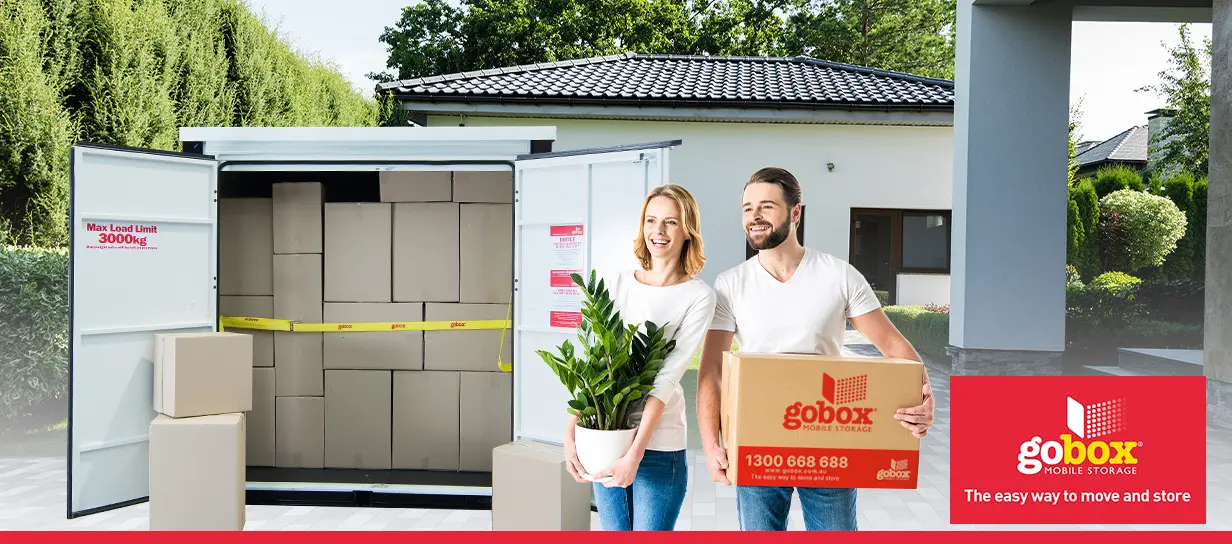
Start with larger and heavier belongings and keep the weight reasonably distributed throughout the container.
Then:
- Place heavier boxes underneath lighter boxes
- Protect furniture before loading
- Fill gaps where practical
- Keep fragile items away from heavy objects
- Label every box clearly
- Keep items you may need sooner closer to the access point
- Make a basic inventory of what's inside
Think about the order you'll need things at the other end.
Items you won't need for months can go further back, while belongings you may want shortly after moving should remain easier to reach.
Why Use Mobile Storage When Moving House?
The biggest advantage of mobile storage during a move is that your storage comes to you.
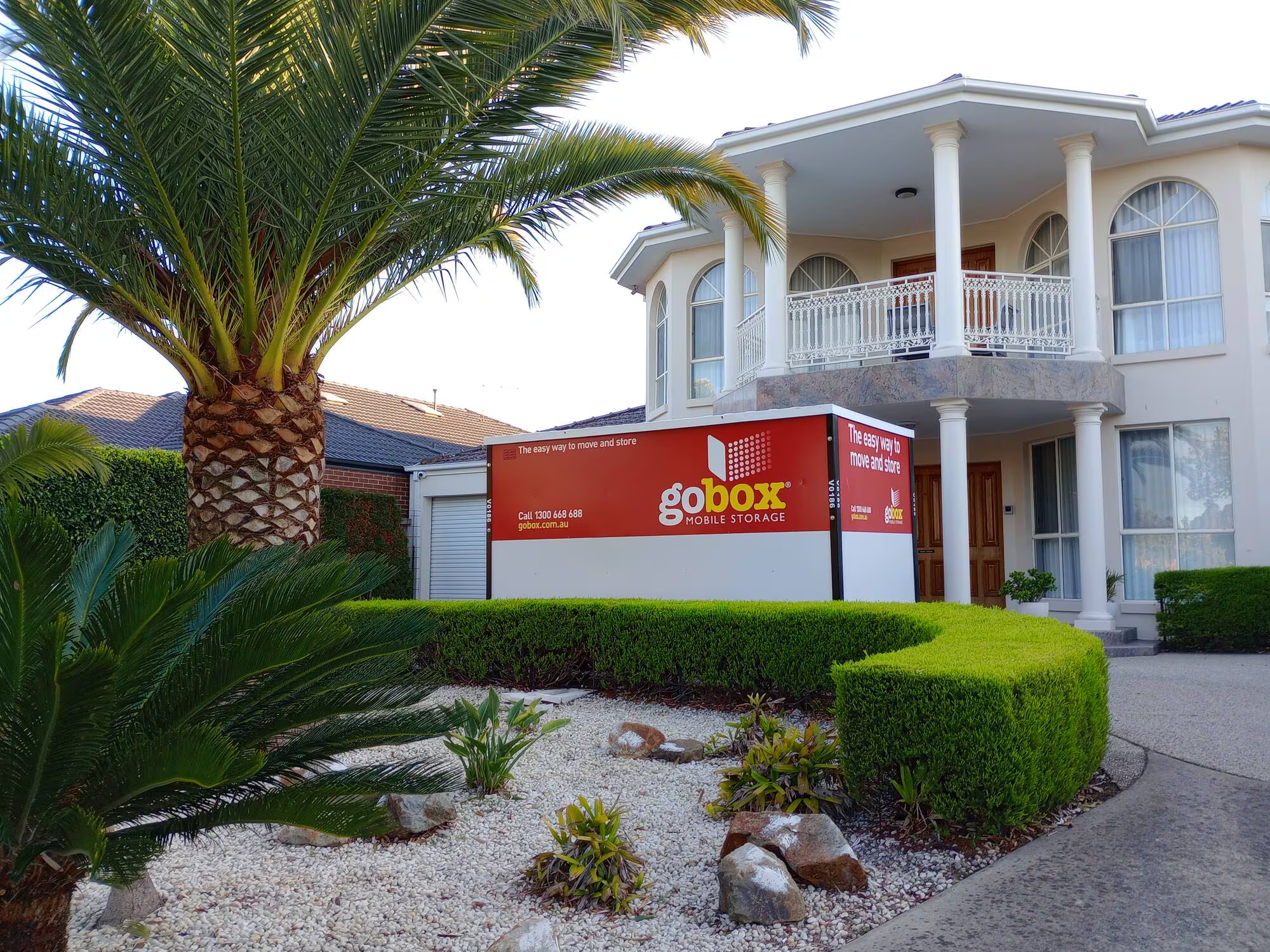
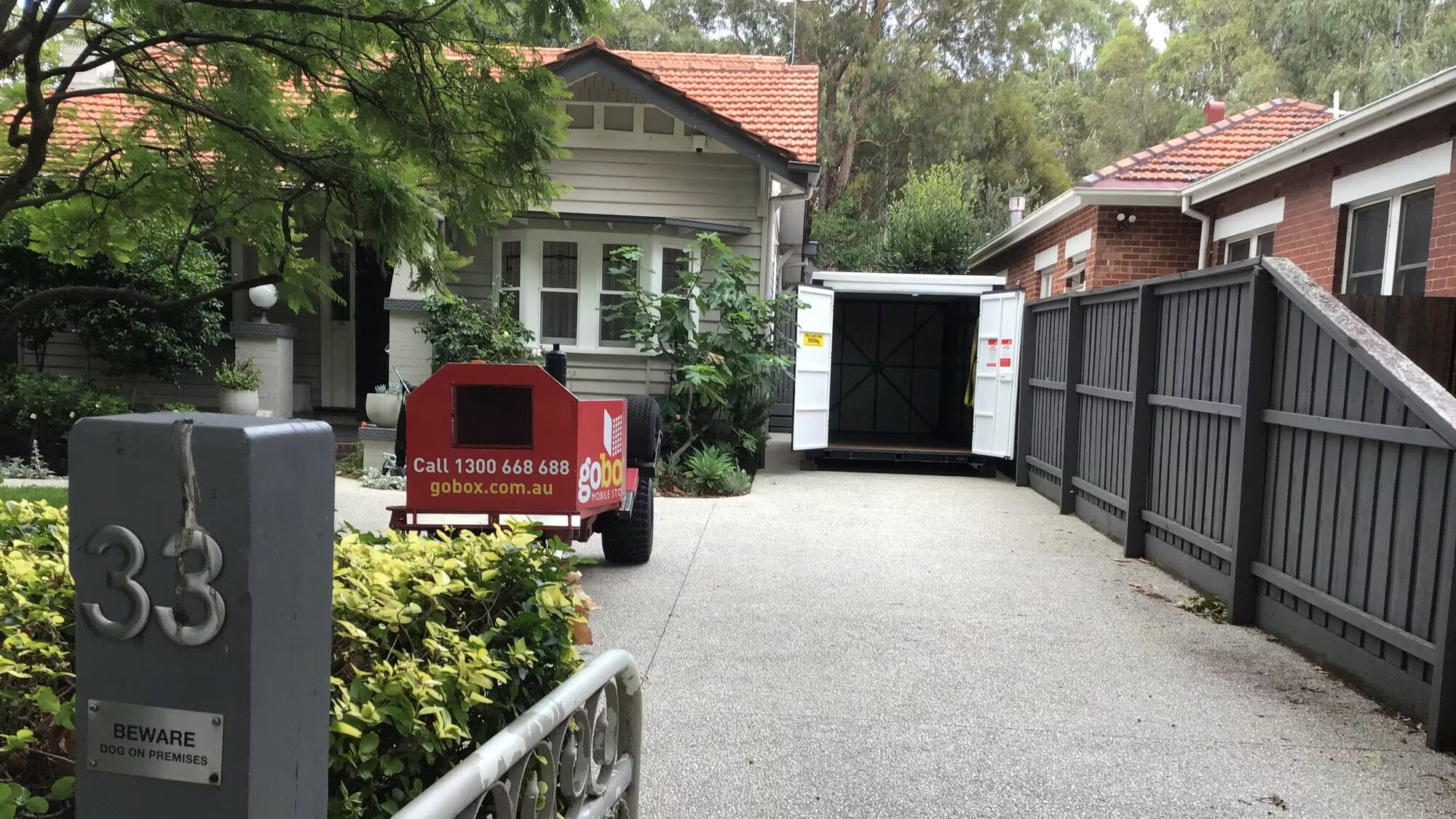
Your gobox is delivered to your property so you can load furniture and boxes without repeatedly transporting everything backwards and forwards to a traditional storage facility.
Once you're ready, your gobox can be collected and stored or moved as required.
This can be particularly useful when:
- You're packing gradually before moving day
- Settlement dates don't line up
- You're renovating before moving into the new home
- You're downsizing
- You need somewhere for furniture temporarily
- You want to unpack the new home gradually
If you want to understand the entire process, read How Does Moving House With a Storage Container Work?.
Make Moving Easier With gobox
You don't have to move your entire household in one hectic day.
By storing furniture, seasonal belongings, sporting equipment, décor and other non-essential items ahead of time, you can create more room to pack and reduce the amount you need to deal with on moving day.
gobox provides flexible mobile storage across Melbourne and Adelaide, whether you need storage while packing, between settlement dates or while you get settled into your new home.
Pack what you need. Store what you don't. Move at your own pace with gobox.